

Human skills will matter more than ever in the age of AI
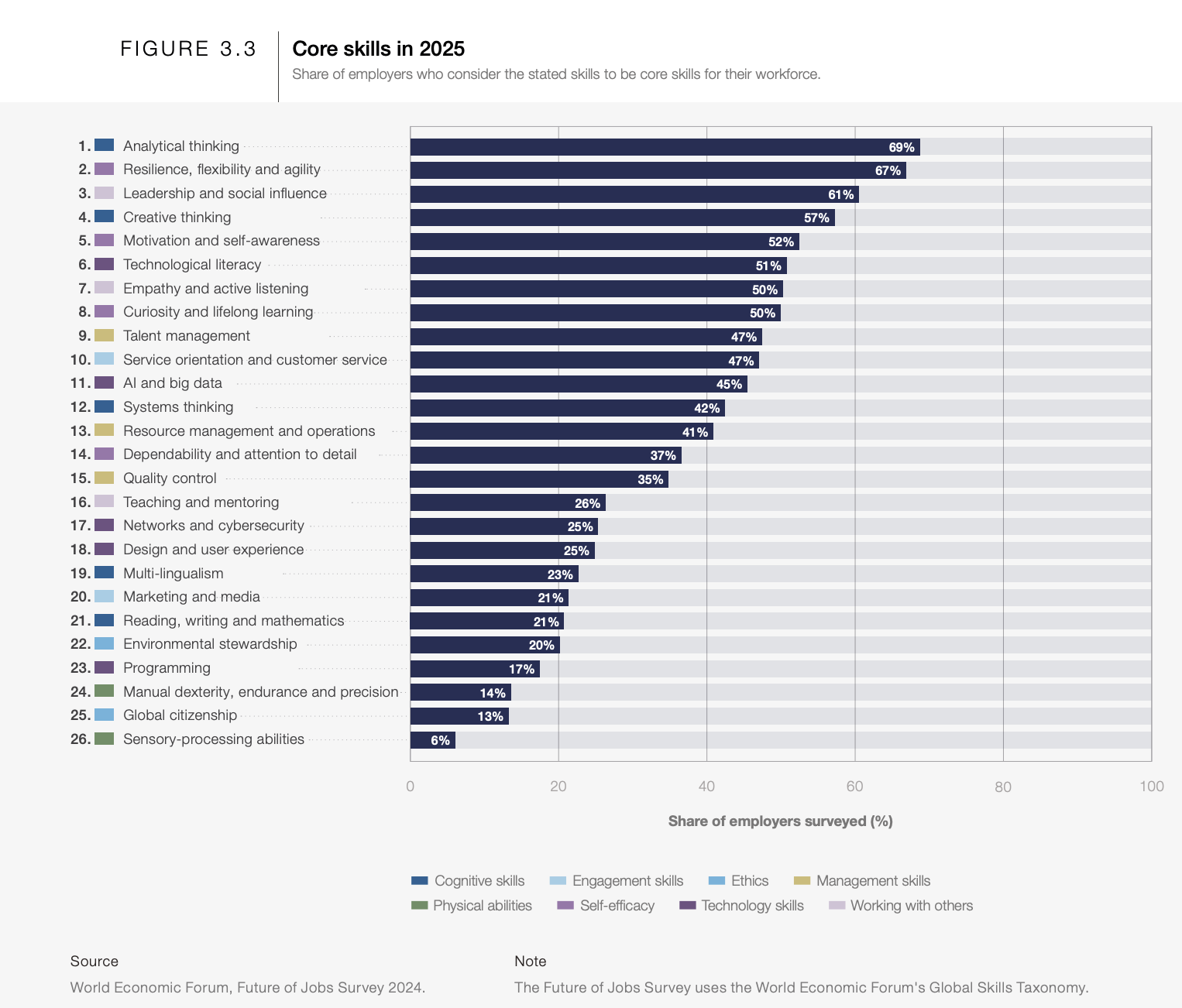
TL:DR - AI is reshaping the workplace, but human skills are becoming more and more important. There is a new focus on the skills that help us work together and collaborate, such as adaptability, resilience, leadership, critical thinking and the ability to influence
The skills we have always called ‘soft’ are now becoming core skills.
We call them Human Skills, because are the skills that set AI and humans apart. And it’s really important that we keep building them.
Yes, the pressure to keep up with technology is real. But while everyone is putting all their effort into up-skilling on the technical (AI) side, research shows that the top skills employers need are actually different ones.
📚 A recent Harvard Business Review study: ‘… human skills like collaboration, adaptability, and critical thinking may prove more important than technical specialisations.’
Human Skills
AI can write a performance review, but it can't deliver the message of ‘you’re underperforming’ in the right tone of voice, to someone who's about to cry.
AI can generate a feedback framework, but it can't have a real conversation with the person who gets defensive every single time. It can’t sense when these conversations will take a bad turn, or where there is an opportunity to save the day with a much needed hug.
We’re no fortune tellers, but we believe this is not a technical limitation that will get solved at soon. AI is not the tool to take over important ‘human’ interactions.
‘AI might be changing what people need to be good at, but it isn’t eliminating the need for people skills.’
(McKinsey, 2026).
We know it takes years to build strong people skills, that allow us to properly do what AI can’t. We’ve seen the studies that emphasize the need for those skills will only increase. We also know that when there’s cost cutting to be done, the first line-item in the people-budget to be cut is… budget for learning & development. 🤯
As a People & Culture professional, you see the cost of under-investing in human skills every week: in the conflicts that escalate, the high performers who leave, the teams that fall apart under pressure that a little more trust could have absorbed.
The question isn't whether human skills matter. It's whether your organisation is willing to treat them with the same seriousness as technical ones.
Because the organisations that will come out ahead aren't the ones that went hardest on AI. They're the ones that did both and understood that technology without strong human skills doesn't deliver on its promise.
Time to step up and fight for human skills! 🥊
So what can you do?
An obvious action is training. These skills don’t build themselves. They need instruction, practice and repeated effort. We’re a big fan of using training actors in our sessions so people get proper practice time! Training is not the whole story though, it’s just one piece of the puzzle.
Here are other things you can do that can make a real difference without needing a big budget or a long program:
1️⃣ Stop framing these skills as ‘soft skills’.
Let’s start with an easy one. ‘Hard skills’ and ‘soft skills’ make it sound like ‘hard skills’ are the important ones and ‘soft skills’ the nice to haves. In that way, the soft skills will never be equally valued to the hard skills.
Here’s some inspo: Instead of ‘hard skills’, use: Technical skills, Functional skills, Craft skills, Specialist skills, Task skills. Instead of ‘soft skills’, use: Human skills, Power skills, People skills. Language matters 🙋🏻♀️
2️⃣ Audit where human skills are lacking.
Start with your data. Where in your organisation is turnover highest? Which teams have the most conflict landing? Which managers get the lowest engagement scores?
If you do eNPS or engagement surveys, you can quite easily tell what’s ‘off’ right now.
That's where the human skills gap lives. These are the teams to start with.
3️⃣ Make the business case using the AI narrative.
If leadership is pushing AI investment, use it. “As we automate more of the operational work, our managers need to be stronger on the human side. That's what will make or break adoption.” It reframes human skills from a “nice to have” to a strategic necessity. Which it is. You can use the studies we refer to below as reliable data sources to prove your point.
4️⃣ Start with one key skill.
Pick one concrete skill your people genuinely struggle with; giving feedback, navigating difficult conversations, managing emotions under pressure - and go deep on it. One well-designed session that people actually practice and apply beats a five-module e-learning that nobody finishes. Building these skills is like going to the gym.
It takes time and repeated effort to see results, so don’t try to train for all of them at the same time. Learning sticks the most when you train a skill people struggle with right now.
5️⃣ Create space to practise, not just learn.
The biggest reason human skills training doesn't stick, is that people learn the theory and then go straight back into back-to-back meetings. With no room to try. To apply those learnings. This changes when moments of instant application are built in. Time set aside to practice what you’ve learnt.
People in business partner roles: use your 1:1s with managers to refer back to the training. Share what you’ve observed in terms of behaviour change, support them to keep on practicing, celebrate what’s going well. Help them to integrate learnings into ways of working.
The irresistible organizations of the future are the ones who recognize (and show) that the ‘soft’ skills are equally - if not more - important to build as the ‘hard’ skills.
The point of this newsletter is not to bash technical skills or diminish the importance/impact of AI. But we should stop treating human skills as nice to haves, and prioritize them like we have been prioritizing technical skills.
☀️ Our summer challenge for you: reflect on which human skills your organisation needs most right now… and how you will help them improve these.

7 resources on Human Skills