Turning the akward topic into an easy conversation
💸 Salary. The reason most people work in the first place, and often the most difficult or awkward topic to discuss, especially for employees and managers.
TL;DR - you are rocking it if you already have a:
If you can still make some progress on the above points, keep reading 🧐.
Imagine this scenario: Tomorrow you (or someone in your HR department) presses the wrong button, and all salaries + recent increases are shared with everyone in the organization.
Would you have a major problem? 😱 Would people find out there are unexplainable salary differences, and rewards are all over the place? Would people who have worked there for a long time be upset, because recent hires earn more?
Or would you be ok!? 😅 Not a desirable situation maybe, but not the end of the world because you can explain every salary someone earns. The differences in pay are based on the level of responsibilities and seniority. People kinda know what others are earning anyway, as you have a clear levelling / benchmarking framework in place.
This is the scenario we would love to challenge you on. You should live as though this will happen. Because, it’s already happening. People talk about salary, and the less transparant you are - they more they talk about it beyond your back. Also, the less transparant you are, the more questions people will ask.
By the way: The above scenario (all salaries being shared by accident) is a true story. It happened. In that case, it didn’t cause a big issue. To be fair, the HR person did have a little heart attack, a sleepless night and feared some backlash. But, aside from a few frowns and the odd question, it ended up not being an issue. Because people in that company knew their own level, knew the level of their colleagues and they knew the salary ranges for the levels.
They understood the recent increases, and how (most) decisions had been made. Pfew 😎

Why is it so difficult to talk about money? Actually, it’s only difficult when it’s not transparant and fair. When employees know how salaries are benchmarked, calculated, reviewed and decided on, they are a lot less likely to ask for a raise off-cycle or ask for a counter offer because they can earn more somewhere else.
Having transparant compensation principles, and sticking to them creates trust.
It also gives you a competitive advantage over companies who aren’t transparent. Turning money into a normal conversation, or a non-conversation because people are always informed what they can expect, has huge benefits.
The result of transparency in pay:
⭐️ More applications, 30% more if you include the salary ranges
🤝 Faster recruitment process, due to better aligned expectations
📈 Increased trust in the company brand, due to transparency offered
🖤 More inclusivity, because you offer fair, equitable pay
🤗 Increased retention, due to a feeling of fairness and transparency
💰 Less spent on replacement hires
😊 Happier Employees
But how? You don’t have to go all out in 1 go!
Transparency can be scary. But you don’t have to go all out. We love our friends from OpenOrg for creating a movement to make companies more transparent. They’ve created the super useful Open Org Culture Framework, where you can check how transparent you are on each topic (not just compensation). There are 4 levels, and our recommendation is to map your current transparency to these levels, and see if you can level up!
EU Pay Directive
If you need more reasons to become transparant about compensation, there is a legal one. The EU Pay Directive came into force last year, and all companies have a few years to prepare for the execution. Don’t wait! If you are the last one to jump on the equal pay and transparency train, employees will think you are hiding something.
🔜 The directive requires companies to disclose the percentage gap in pay between men and women. It will also require the disclosure of the total compensation ratio of the highest paid individual to the average total compensation for all employees.
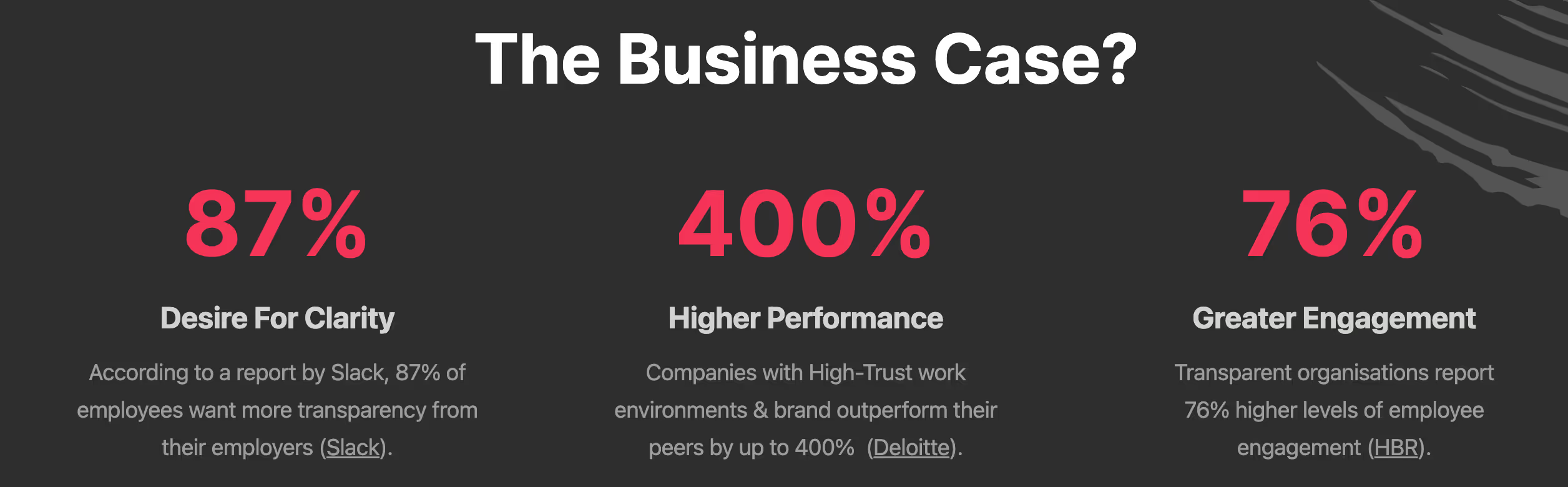
Employees tend to dislike asking for a raise because it can be an uncomfortable conversation. They could get a no, and they don’t want to argue with their manager. (More than 68 percent people say they'd rather talk about their weight than money 🤯). Asking for money can be seen as greedy or ungrateful. The result is they don’t ask, they simply take another job and resign.
Managers hate saying no to a request from an employee for a raise. Mainly because they see it as their job to retain people and keep them happy. Afraid to lose people, giving a raise is easier than saying no to such a request. Managers will often blame HR (or company policy) for not allowing a raise, where it would be much more powerful if they could explain why the salary is what it is - and how what the employee would have to do to be eligible for a higher salary.
We highly recommend training your managers on how to communicate about compensation, and ensure they fully understand they compensation philosophy.
Moral of the story: You will boost trust and employee morale with transparent pay communication. Transparency is a trend that will stay and embracing it is going to lead to… an irresistible organisation 💖
.png)