


Change done Right and what you can do to make it easier
Change is coming. If you’re reading this, there’s a 100% chance you’ll deal with changes in the coming months.
Especially in HR - being able to guide change is a great skill to have. It’s a big topic, but accepting the emotions and realities around it will help people adapt smoother.
TL;DR: Change is inevitable, so work on your resilience.
Who’s in Control?
Change has such a negative association, even though it’s actually something we all need - and sometimes want - to avoid stagnation.
Thing is - it’s a matter of control. Change feels exciting when it’s your own idea or choice, but unsettling when it’s not - because we feel out of control. This leads to very natural emotions - which can come across as resistance.
When guiding others through change, you should expect some resistance from those affected - because they’re not in control.
😎 Resistance is Awesome
Also, don’t spend too much time trying to ‘manage’ resistance. Resistance is actually a good sign! It means people care - about the situation, the company or team.
What’s actually concerning: when things go silent. When people stop asking questions in update meetings, stop pushing back and just seem indifferent. That means they’re checking out. And checked-out people won’t be adding value to your company.
We need to help leaders understand that they are working with humans, and to expect and embrace resistance. Even the most impressive presentation or convincing reason about why a change needs to happen, will not resonate if you don’t address people’s emotions first.
Remember, humans become emotional in out-of-control situations. And emotional people don’t necessarily respond to rational explanations.
💡 Big tip: Don’t rush to “fix” emotions. Let people have the time and space to process their feelings. Build this into your change process - moving too fast will just extend their resistance and overall change process.
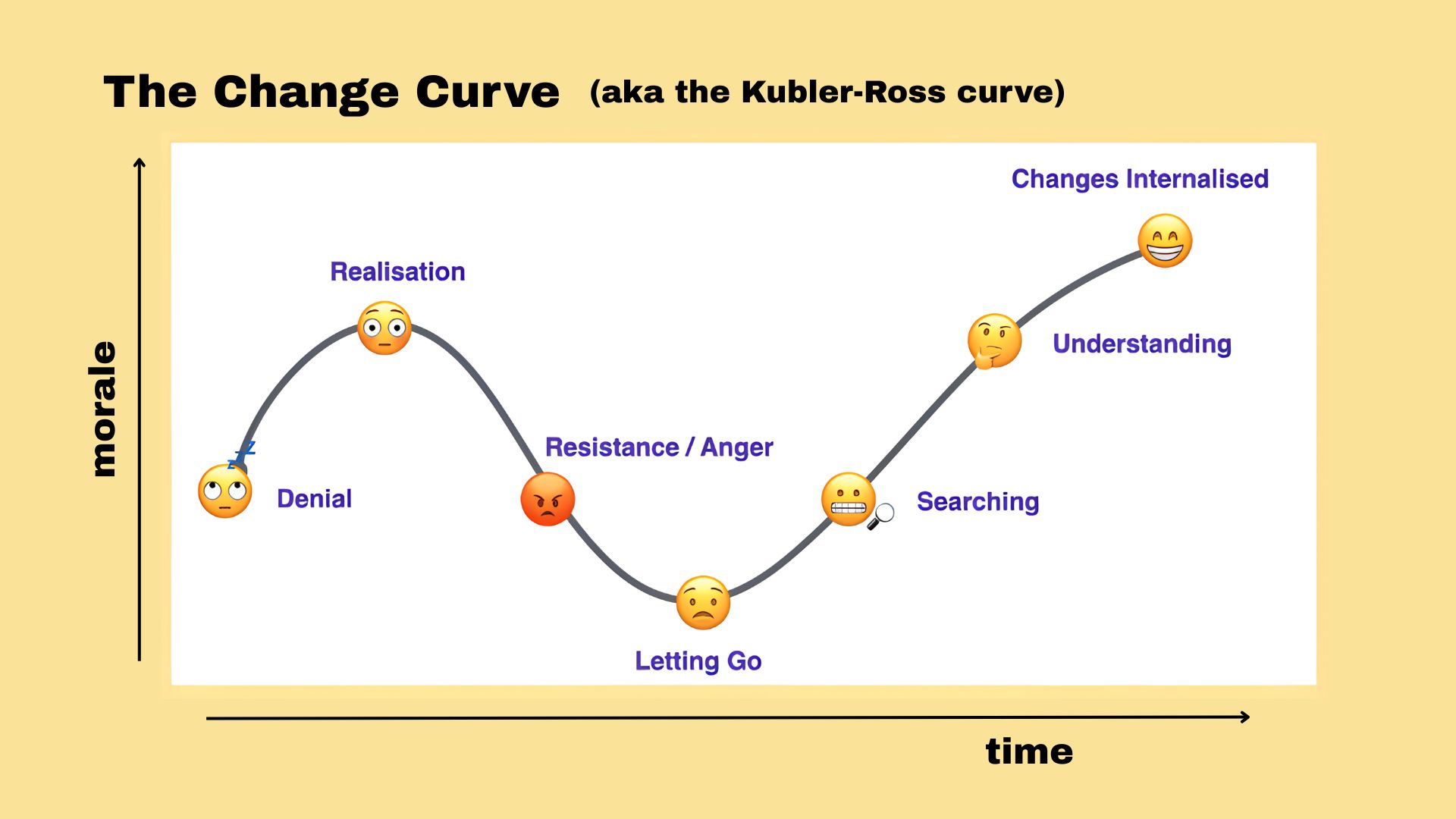
Trust the Change Curve
The above curve shows how people move through different stages of responses to big changes over time, and the effect on morale.
Most people eventually reach the end of this curve given enough right time and information. But they’ll go faster - and feel more excited about the change - if they feel informed, heard and involved in decisions.
Often, leaders will only communicate the changes when they’re already a few phases ahead on the curve. They’ve had time to process, understand and adjust, and feel back in control. Their teams haven’t - and need that time to catch up.
Resilience and Change: Two Sides of the Same Coin
You can’t fast-forward people through the change curve. How you can help people (and yourself) prepare for change, is to build the capacity to adapt more easily next time.
In other words, build up resilience 💪
Resilience isn’t about ‘toughing it out’. It’s about finding stability amidst the uncertainty, by integrating change into their work culture.
It’s also how teams can turn change into opportunities for growth. Reframing change as “our next version” instead of “our next crisis”, means being able to bounce forward instead of just back.
Resilience also builds trust
Resilient leaders don’t pretend to control everything. They show confidence in learning as they go, even without all the answers.
Transparency and honesty creates trust, making people feel safe enough to stay engaged, and future changes easier to navigate.
How do you help teams build resilience to prepare for change?
1. Facilitate honest conversations
Resilience starts with psychological safety. Teams that can talk openly about challenges, adapt faster.
Begin meetings with this check-in: “What’s one thing that feels heavy this week? And what’s giving you energy?”
2. Reframe the narrative
Change can feel overwhelming: “This is a lot, we’ll never fix this”. Widen the perspective and ground the team in what still feels stable.
When things feel stuck, discuss together:
3. Create “learning moments,” not “failures”
Progress always includes failures. Resilient teams normalise that and talk about it regularly, reframing mistakes as data or learnings. It turns the emotional charge of error into curiosity and learning.
Try saying: “That’s useful information” when sharing fuck-ups, and celebrate experiments that go wrong.
4. Purpose matters 💜
Purpose gives resilience its why. When people connect the change to something meaningful (customers helped, values lived, impact made), it can give the motivational energy they need to push through.
Regularly remind everyone: “What’s the bigger reason behind this change?”
Managing changes is always challenging, but understanding the curve and working on resilience is a great start.
Let’s build irresistible organizations, where change is met with resilience!